OEM parts come from the original manufacturer. OEM pulls are original parts removed from other devices. Service packs are original parts in the manufacturer's service packaging. Aftermarket parts are made by third parties. For iPhone screens, incell is an LCD-based aftermarket option, while hard and soft OLED are aftermarket OLED options. Screen grade names differ from supplier to supplier, so compare listings on display technology, origin and what is included. Always read each listing's own quality description, for example on iPhone screen listings.
What do the common terms mean?
| Term | Usual meaning | What the customer notices |
|---|---|---|
| OEM | Made by or for the original device maker | Behaves like the original |
| OEM pull | Original part removed from another device and tested | Original behavior; cosmetic condition varies |
| Service pack | Original part in the manufacturer's service packaging (common for Samsung) | Behaves like the original |
| Refurbished | Original part with replaced glass or other components | Usually close to original; depends on the process |
| Aftermarket | Made by a third party | Varies by grade: color, brightness, thickness |
| Incell (iPhone) | LCD-based aftermarket screen for OLED iPhones | Thicker; blacks look greyer; lower cost |
| Hard OLED (iPhone) | Aftermarket OLED on a rigid substrate | OLED look; slightly different fit and feel |
| Soft OLED (iPhone) | Aftermarket OLED on a flexible substrate | Closest aftermarket option to the original |
Suppliers define their own tiers. Treat this table as a general guide and read the listing.
How do you compare screen grades between suppliers?
Grade names such as premium, A+ or OEM quality are each supplier's own labels, so the same word can mean a different screen at two suppliers. Before you compare prices, put every screen listing into the same columns.
| Item | Why it matters | Ask if the listing does not say |
|---|---|---|
| Display technology | LCD (including incell) or OLED sets thickness, contrast, power use and the price band | Is this screen LCD or OLED? |
| Origin | Original or third-party decides how you describe it and, on recent iPhones, which Parts and Service History label appears | Was this part made by or for the device maker? |
| OLED type (aftermarket OLED) | Hard and soft OLED differ in fit and feel | Is it hard or soft OLED? |
| Condition (OEM pull or refurbished) | Cosmetic marks and replaced glass vary between batches | What cosmetic grade is it, and was the glass replaced? |
| What is included | A frame or preinstalled small parts change your labor time and the real cost per repair | Does it come with a frame or preinstalled parts? |
| Warranty and returns | You need the terms for the grade you buy, not only the store default | Are the warranty and return terms the same for every grade? |
Why the listing photo is not enough
A listing photo rarely tells you the tier. The three Galaxy S22 Ultra screen assemblies below come from one supplier catalog: a service pack, an OEM refurbished part and an aftermarket part, all with frame and in Phantom Black. The front of each photo uses the same graphic; apart from the small badges and the view of the back, they look alike. Read the tier in the listing title and fill in the table above for each one before you compare prices.
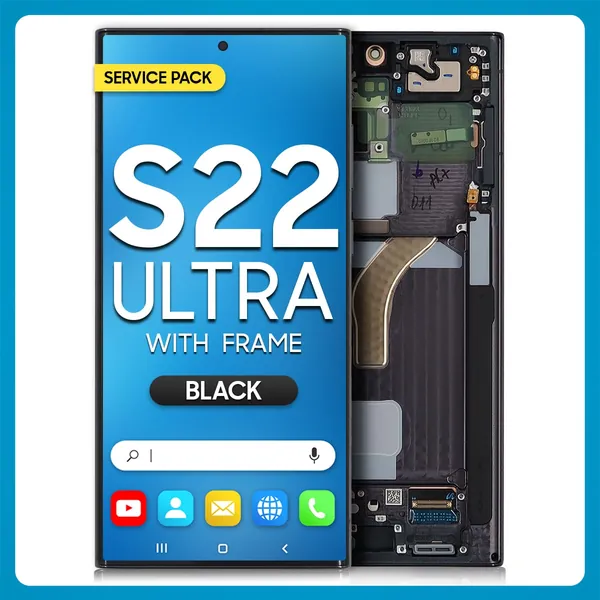 Service pack
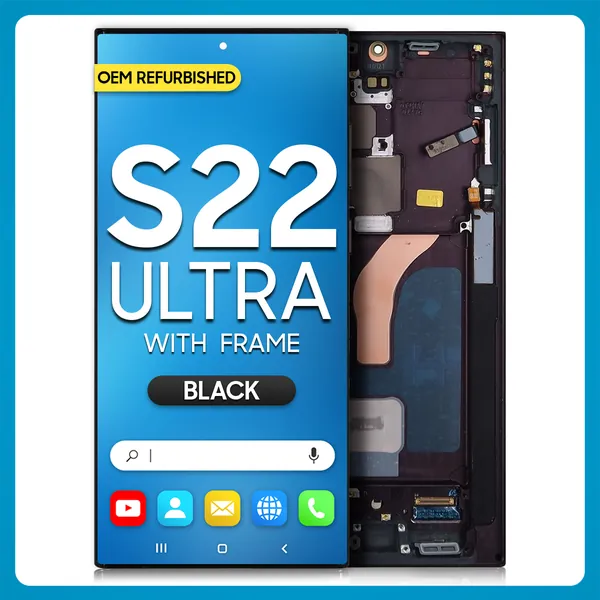 OEM refurbished
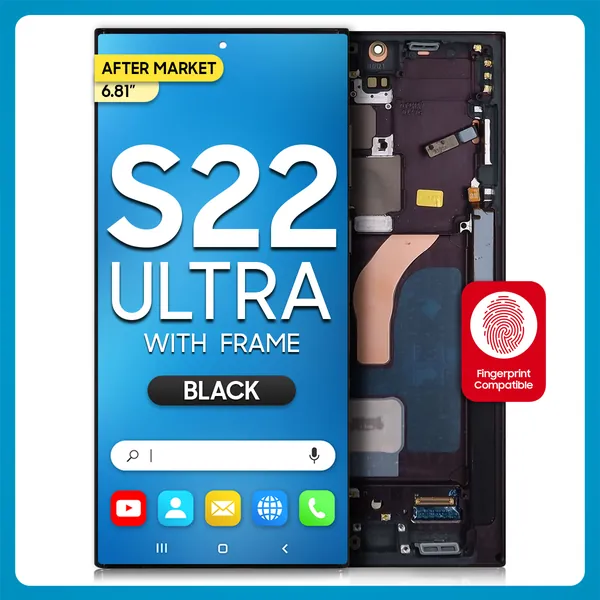 Aftermarket
What to test when a new screen grade arrives
Apple lists the problems a nongenuine iPhone display might cause. Use that list as a bench test on a sample of each new grade before you stock it:
- Touch: dead areas, missed or misplaced touches, accidental edge or palm touches, and touches during a call.
- Calls: the display should turn off when the phone is held to the ear.
- Brightness and color: True Tone, automatic brightness from the ambient light sensor, color that looks too yellow or too blue, uneven brightness and a lower maximum brightness.
- Battery: unexpected drain after the repair.
Apple also says a nongenuine display can show issues after an iOS update that contains display updates, so recheck a test phone after major updates. Record the result for each supplier and grade in your first order log.
Red flags in screen listings
- A grade name with no display technology stated.
- Original quality or OEM quality with no statement of whether the part is original or third-party.
- Photos that do not show the part being sold, or the same photo for every tier (see the example above).
- No warranty or return terms on the listing or a linked policy.
How does iPhone parts pairing affect quality choices?
On iOS 15.2 and later, Apple's Parts and Service History (Settings > General > About) shows how a replaced part was identified. Which parts are listed depends on the model; iPhone 12 models and later cover the battery, display, front camera, rear cameras and logic board.
| Label | What Apple says it means | What it means for the tier you sell |
|---|---|---|
| Genuine | Repair used genuine Apple parts and processes | OEM or service-channel parts finished with Apple's calibration |
| Used | The part was already used or installed in another iPhone | A genuine OEM pull, when the repair is finished with Apple's calibration process (for displays: iPhone 15 and later with iOS 18 and later) |
| Unknown | For example, a nongenuine part, a part not working as expected, or one not verified and linked to the iPhone | Aftermarket screens and batteries, or a genuine part not yet verified and linked to the iPhone |
| Unverified | The logic board was previously used in another iPhone | Can affect features such as Apple Pay |
Apple notes that an Unknown part might affect the trade-in value of the device, and that the iPhone shows a notification after the repair. Tell customers which label to expect before the repair, and write it on the ticket.
How should you explain quality tiers to customers?
- Offer two options: original-quality and value.
- Describe the difference in one sentence about what they will see.
- Write the chosen tier on the ticket and the invoice.
Suppliers that sort categories by tier make this easier. For example, Parts4Cells separates Samsung service packs from Samsung OEM pulls and Samsung aftermarket OLED screens.
Samsung US also sells genuine parts, tools and repair manuals through its Self-Repair program, which it says is for individual owners and unaffiliated repair businesses. Samsung states that those genuine parts carry a 90-day limited warranty from delivery, so compare that with the warranty on a supplier's service pack listing, using the terms in how to compare supplier warranties. The home page sets out where repair shops buy phone parts, including Apple's genuine parts programs.
Frequently asked questions
Is OEM pull the same as refurbished?
Not always. An OEM pull is removed and tested; a refurbished part has had components such as the cover glass replaced. Check the listing.
Will an OEM pull show as genuine on an iPhone?
Apple labels a genuine part that was already installed in another iPhone as Used, when the repair is finished with its calibration process. For displays, Apple shows Used on iPhone 15 and later with iOS 18 and later. Otherwise it can show as Unknown.
Why do incell screens cost less?
They use LCD technology instead of OLED, which is cheaper to produce, with trade-offs in thickness, contrast and power use.
Is OEM quality the same as OEM?
Not necessarily. Ask whether the part was made by or for the device maker. If the listing cannot say, price and describe it as aftermarket.
Can you tell a screen tier from the listing photo?
Not reliably. Some listings use the same front graphic for every tier, so read the tier in the listing title and confirm display technology, origin and what is included.
Sources
- Apple Support: iPhone Parts and Service History (published October 22, 2026)
- Apple Support: About genuine iPhone displays (published October 22, 2026)
- Samsung US: Self-Repair program
Sources checked November 13, 2026. Prices, stock and program terms change; confirm them on the linked pages.